Blow Molding Machines: Equipment Features, Industry Applications, and Cutting-Edge Intelligent Technologies
1. What Is a Blow Molding Machine?
A blow molding machine is one of the core pieces of equipment in plastic packaging machinery. It is primarily used to inflate and shape thermoplastic plastic pellets (melted and plasticized into parisons) or preforms into hollow containers with specific geometries, using molds and compressed air. Compared to traditional manual glass blowing or low-speed compression molding, modern automated blow molding machines offer advantages such as high molding speeds, uniform specifications, high hygiene standards, and high raw material utilization, making them indispensable equipment for modern large-scale production lines.
2. Mainstream Classifications and Process Characteristics of Blow Molding Equipment
Based on differences in molding principles and mold structures, blow molding equipment primarily encompasses the following mainstream categories:
| Equipment Type | Applicable Materials | Process Flow | Typical Applications & Advantages |
|---|---|---|---|
| Extrusion Blow Molding (EBM) | HDPE, PP, PVC | Screw plasticizing & parison extrusion ➔ Mold closing & clamping/pinch-off ➔ Blow pin inflation & cooling ➔ Deflashing | Thicker container walls, excellent drop resistance; suitable for shampoo bottles, motor oil containers, milk bottles, etc. |
| Injection Stretch Blow Molding (One-Step ISBM) | PET, PC, PP, PCTG | Plasticizing & preform injection ➔ In-mold temperature conditioning ➔ Mechanical stretching & blow molding ➔ Demolding | No intermediate transport or secondary reheating; superior product clarity with no parting line defects; widely used for pharmaceutical wide-mouth bottles and high-end cosmetic packaging. |
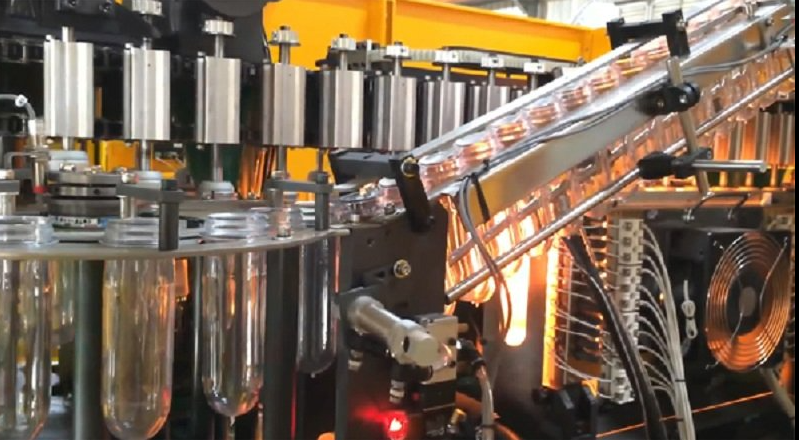
| Reheat Stretch Blow Molding (Two-Step SBM) | PET, BOPP | Purchased/prefabricated preforms ➔ Infrared heating & softening ➔ In-mold biaxial stretch high-pressure blow molding ➔ Pressure release & bottle ejection | Extremely high output (up to tens of thousands of bottles/hour per machine), suitable for intensive continuous filling; preferred choice for beverages, mineral water, and edible oil industries. |
| Multi-Layer Co-Extrusion Blow Molding | EVOH + HDPE/PP composite layers | Multi-extruder co-extrusion ➔ Multi-layer composite parison ➔ Blow molding & shaping | Features outstanding oxygen barrier and anti-permeation properties, significantly extending product shelf life; used for flexible juice packaging, high-barrier pharmaceuticals, and ketchup bottles. |
3. Core Technical Advantages and Structural Features
Modern blow molding machines have undergone extensive iterations in mechanical structure, mold clamping systems, and pneumatic circuits, resulting in the following core process characteristics:
- High-Efficiency Force-Multiplying Clamping System (High-Pressure Airbag / Toggle Compound Mechanism): At the moment of high-pressure blowing, the mold cavity withstands immense expansion pressures of 25–40 bar. High-end blow molding machines commonly adopt a “five-point double-toggle mechanical transmission + bottom oil-free high-pressure airbag pressurization clamping” solution. This configuration not only delivers sufficient and uniform clamping force but also significantly reduces mechanical shock and wear on the kinematic toggle joints, eliminates the risk of bottle contamination from hydraulic oil leaks, and extends mold platen service life.
- Precision Neck Positioning and Reliable Sealing System: Blow molding machines are equipped with wear-resistant cylinders and specialized polymer seal components (utilizing patented self-adaptive locking blow nozzle seal technologies for special bottle shapes or wide-mouth containers). This ensures complete sealing between the mold lip and the bottle finish during high-frequency blowing, preventing container molding defects caused by pressure loss.
- Lightweight, High Strength, and Biaxial Stretch Toughening: Through mechanical pre-stretching by the stretch rod along the vertical axial direction and circumferential expansion by high-pressure air, polyester molecular chains are highly oriented in a two-dimensional plane. This molecular restructuring significantly enhances the plastic bottle’s tensile strength, impact toughness, surface gloss, and gas barrier properties.
4. Key Downstream Application Areas
Featuring light weight, shatter resistance, chemical stability, and design flexibility, hollow plastic containers have largely replaced traditional metal cans and glass bottles across multiple industries:
- Soft Drinks and Packaged Water: PET bottles for mineral water, carbonated soft drinks, ready-to-drink tea, and juices, with annual consumption reaching hundreds of billions of units. This sector demands ultra-lightweight designs and high-speed blowing of tens of thousands of bottles per hour per machine.
- Daily Chemicals and Personal Care: Shampoo, body wash, dishwashing liquid, and skincare lotion bottles, emphasizing surface gloss, complex industrial bottle geometry, and chemical resistance.
- Pharmaceuticals and Nutraceuticals: Liquid oral medicine bottles, wide-mouth vitamin capsule bottles, and medical eye-dropper bottles, which demand strict cleanroom environments, moisture barrier sealing, and sterile, non-toxic standards.
- Food and Condiments: Edible vegetable oil jugs, soy sauce bottles, and squeeze honey bottles, which require balanced drop strength, UV protection, and good top-load/stacking performance.
- Industrial Chemicals and Lubricants: Pesticide bottles, lubricant jugs, and antifreeze containers, emphasizing chemical solvent barrier properties and environmental stress-crack resistance (ESCR).
5. Technical Bottlenecks and Intelligent Trends in Modern Blow Molding Equipment
Currently, downstream beverage and FMCG brand owners have placed two rigorous demands on blow molding equipment:
- **“Extreme Lightweighting” Driven by Raw Material Cost Sensitivity:**Raw material costs account for the lion’s share of plastic bottle manufacturing costs. Downstream enterprises urgently require lighter individual bottle weights (for example, reducing a 500 ml purified water bottle to 8–9 grams) while maintaining container top-load strength and warehouse stacking performance.
- **“Flexible and Fast Mold Changeovers” Driven by Shortened Product Lifecycles:**Consumer goods iterate rapidly, requiring blow molding equipment to support fast changeovers among multiple product variants. This necessitates modular mold designs and compressing overall machine changeover times to within 15–30 minutes.
To address these challenges, equipment manufacturers are accelerating the following intelligent upgrades:
Inline Closed-Loop Control Technology
Traditional blow molding processes rely heavily on the trial-and-error experience of operators; ambient temperature and humidity shifts or batch-to-batch preform variations can easily cause uneven wall thickness. Modern high-end stretch blow molding machines have widely adoptedprocess closed-loop self-correction systems:
- Inline 100% Infrared Thickness Inspection: Non-contact inline thickness sensors (such as industrial-grade inline infrared/near-infrared high-frequency thickness measurement systems) are integrated at the machine discharge end to perform millisecond-level wall thickness scans at various heights and circumferential angles for every bottle at high operating speeds.
- Data Feedback and Intelligent Segmented Heating Oven Adjustment: When the system detects a localized wall thickness deviating from target tolerances (e.g., too thick or too thin), the closed-loop control algorithm automatically identifies the corresponding heating zone. It then adjusts the output power of the infrared heating lamps in that specific section within milliseconds, precisely regulating the preform’s localized heating temperature and stretchability.
- Consistent Quality Output: While keeping initial baseline parameters unchanged, the entire closed-loop control system can autonomously compensate for ambient temperature variations, ensuring that wall thickness tolerances of every manufactured batch remain stable within the micron-level range.